There is a gap in nearly every residential job between the moment a customer says yes and the moment the deposit actually lands in your account. It is usually a few days. Sometimes it is a few weeks. Occasionally it never closes at all and the job quietly dies without anyone ever saying no.
That gap is not a payments problem. It is a momentum problem. And it is expensive in a way that never shows up on a P&L, because the cost is the jobs you did not get, not the ones you did.

Why the gap exists
Watch what actually happens after a customer accepts a quote.
They ring you, or they reply to the email, and they say they are happy to go ahead. Good. Now you have to raise a deposit invoice. That might happen the same day, or it might happen on Sunday night with everything else. Then it sits in their inbox. They meant to pay it. They were going to do it at lunch. Their partner wanted one more look at the numbers. The transfer needs a second approval. Two weeks later you are sending a polite follow-up about a job they already agreed to.
Nobody in that sequence has done anything wrong. The customer has not changed their mind. You have not been slack. The process just has a hole in the middle of it, and enthusiasm leaks out of the hole.
The important thing about that moment of acceptance is that it is the single highest point of customer commitment in the entire job. They have compared you against two other quotes, they have decided, and they feel good about it. Every day after that, that feeling goes down, not up. Doubt gets a chance. A brother-in-law gets a chance. A cheaper quote gets a chance.
If you are going to ask for money, ask for it at the peak.
What the gap actually costs
Three things, in rough order of how much they hurt.
Jobs that evaporate. Not many, but they are pure loss. You did the site visit, you did the take-off, you wrote the quote, and you got a yes. Then nothing. You will never know precisely why, because customers who go cold do not usually explain themselves.
Working capital. If you are ordering materials before the deposit clears, you are financing your customer's job out of your own account. On one job that is an annoyance. Across four jobs at once it is the reason a profitable business runs out of cash, which is the most common way builders go under. Profit and cash are not the same thing, and the deposit gap is where the difference lives.

Your time. Chasing a deposit is unpaid admin. It is also the worst kind, because it puts you in the position of asking a customer for something before you have done any work for them. That is not the note you want to open a six-month relationship on.
The obvious fix, and why it usually is not done
Collect the deposit at the moment of acceptance. Make paying it the same action as accepting.
The reason this has not been standard practice for small builders and trades is not that nobody thought of it. It is that setting it up was historically a project. You needed a merchant facility, a payment gateway, someone to wire the two together, and a way to reconcile what came in against which job. That is a sensible investment for a volume builder doing 200 homes a year. It is obviously not worth it for a sparkie doing 40 jobs.
So the small end of the industry has kept doing it the manual way, and has kept absorbing the cost of the gap, because the fix cost more than the problem.
That maths has changed. Payment providers now do the hard part, and the setup is measured in minutes rather than months. Which means the question is no longer whether it is worth building, it is just whether you switch it on.
What good looks like
A few things separate a deposit flow that works from one that annoys everybody.
The payment is part of accepting, not a separate errand. If the customer has to go and find an invoice afterwards, you have reintroduced the gap. Accepting the quote should take them straight to the payment.
They can pay on a phone, without an account. Your customer is not going to install anything or create a login. If the payment page asks them to, they will do it later, and later is the enemy.
The amount is not a surprise. The deposit, and any later milestones, should be visible on the quote before they accept. Nobody likes finding out what they owe at the checkout.
The money goes to you directly. Be careful here. There is a real difference between a provider that passes payments through their own account and pays you later, and one where you are the merchant and the funds settle to your account on your own schedule. The first arrangement makes someone else's business a dependency of your cash flow. Ask which one you are getting.
You are told when it fails. This is the one people forget, and it is the one that bites. Not every payment method is instant.
The bank debit trap
Card payments confirm immediately. Bank debits do not, and the difference matters more than it sounds.
A BECS Direct Debit in Australia typically settles about two business days after the customer authorises it. In between, it is not money. It can still fail, most commonly because the account did not have the funds. Which means a customer can complete every step, see a confirmation, feel entirely paid up, and the debit can still bounce on Thursday.
If your system tells you that payment succeeded when the customer finished the form, you will order materials against money that is not there.
The correct behaviour is to wait for the bank to confirm before anything is marked as received, and to tell you loudly if a debit later fails. Bank debit is a good rail. It is cheaper than card and customers are comfortable with it. It just is not instant, and any system that pretends otherwise is setting you up.
If you need certainty before you commit to spending, take a card.
Milestones, not just deposits
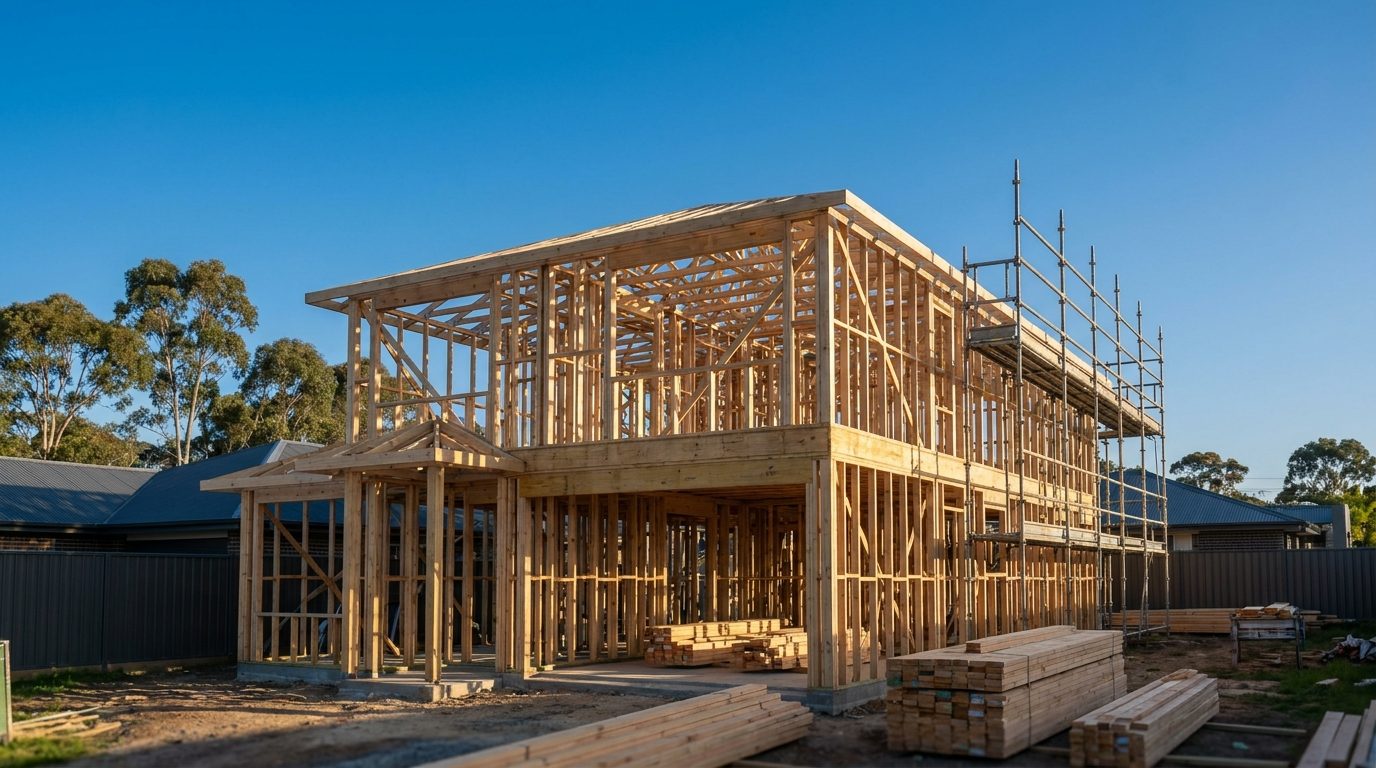
The same logic runs past the deposit. Progress claims have exactly the same gap: you finish a stage, you raise a claim, and then you wait.
Setting the payment schedule out on the quote, as milestones that add up to the contract sum, does two useful things. It makes the payment terms a thing the customer agreed to at the start rather than a request they receive mid-job. And it means each claim is a confirmation of something already settled, not a negotiation.
Customers are also, in my experience, far more comfortable with staged payments they saw on day one than with a series of invoices that appear at unpredictable intervals for amounts they have to check.
What to do about it
If you take nothing else from this: look at your last ten jobs and work out the average number of days between acceptance and deposit received. Most people have never measured it and are surprised by the answer.
Then decide whether that number is acceptable. If it is under a day, you have solved this already. If it is a fortnight, you are financing your customers, and you are losing a share of the jobs you have already won for no reason other than friction.
The fix is not complicated any more. That is the part worth knowing.
Build Paperless lets Australian builders and trades put a deposit or a full payment schedule on a quote, so the customer pays as they accept. Payments settle into your own Stripe account, never ours. See how it works.