Every piece of construction software now claims to have AI. There have been some enormous launches in the last year. Whole platforms rebranded around it, keynote events, glossy videos of a friendly assistant that is going to run your business while you sleep.
Then you sit down with one of these tools on a real job, with real plans and a real deadline, and you notice something. Nothing about your week actually changed. You asked the chat window a question, it gave you a paragraph, and then you went back to doing the takeoff yourself at 9pm.
The numbers say this is not just your experience. An MIT study found that around 95% of generative AI pilots inside companies fail to deliver measurable results. A recent global survey of chief executives found that more than half report getting nothing from their AI spend so far. In construction specifically, surveys show almost half of businesses have no AI in use at all, and only about one in six have taken it beyond a pilot into everyday operations.
So the marketing is everywhere and the results are nowhere. That gap is worth understanding, because AI genuinely can take hours off a builder's week. It just cannot do it the way most software companies are shipping it.
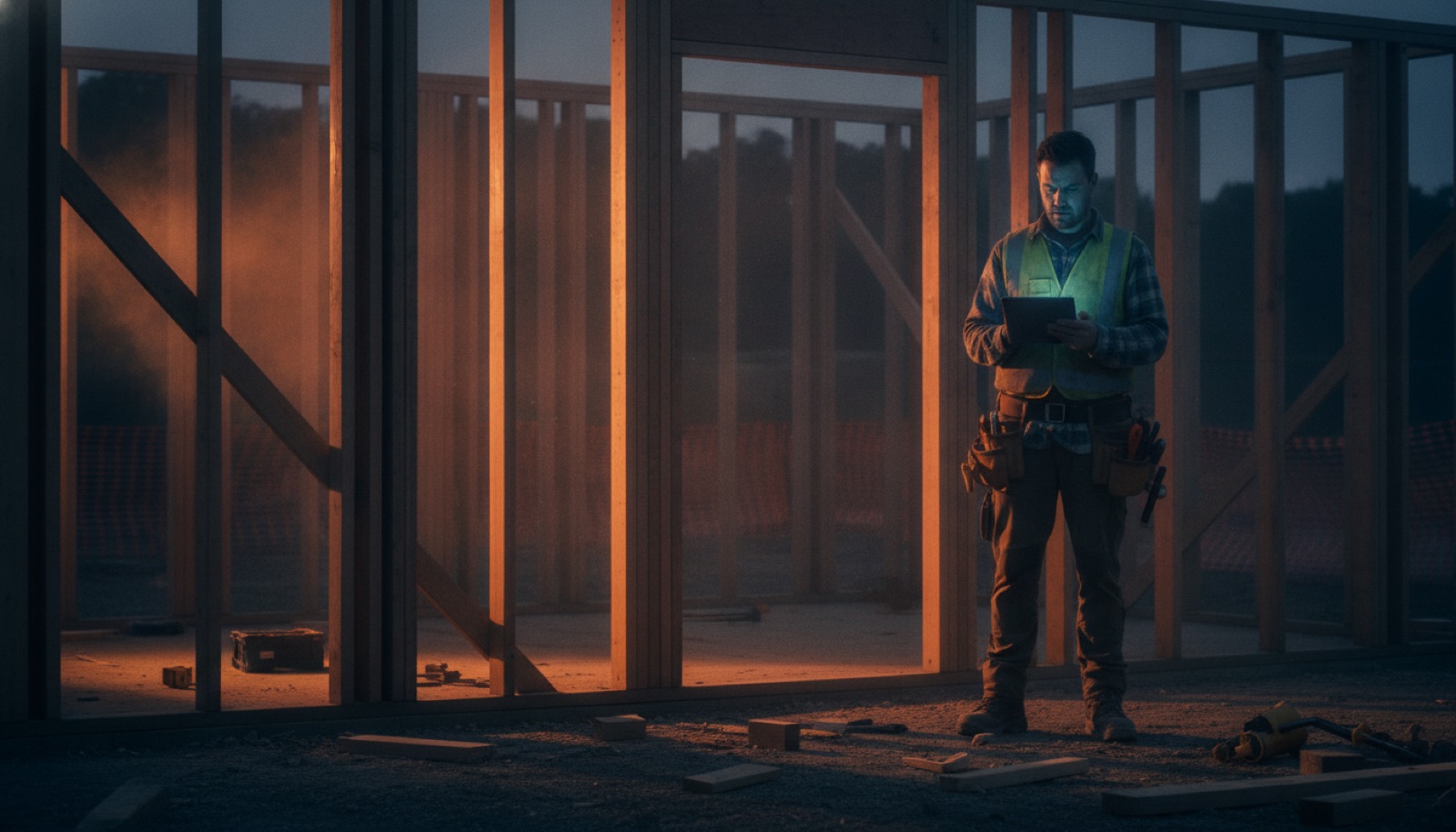
The chatbot gold rush
Here is how the typical AI feature gets made.
A software company has a product that has been around for ten or fifteen years. The board wants an AI story because every competitor has one and the market expects it. The fastest path to a press release is to take a large language model, put a chat window in the corner of the existing product, and give it a friendly name.
The product underneath has not changed. The workflows have not changed. The data has not changed. But the announcement can honestly say the platform is now powered by AI, and for a quarter or two, that is enough.
This is not a construction problem. It is happening in accounting software, legal software, and everything in between. But construction punishes it harder than almost any other industry, for reasons that are specific to how building work actually happens.
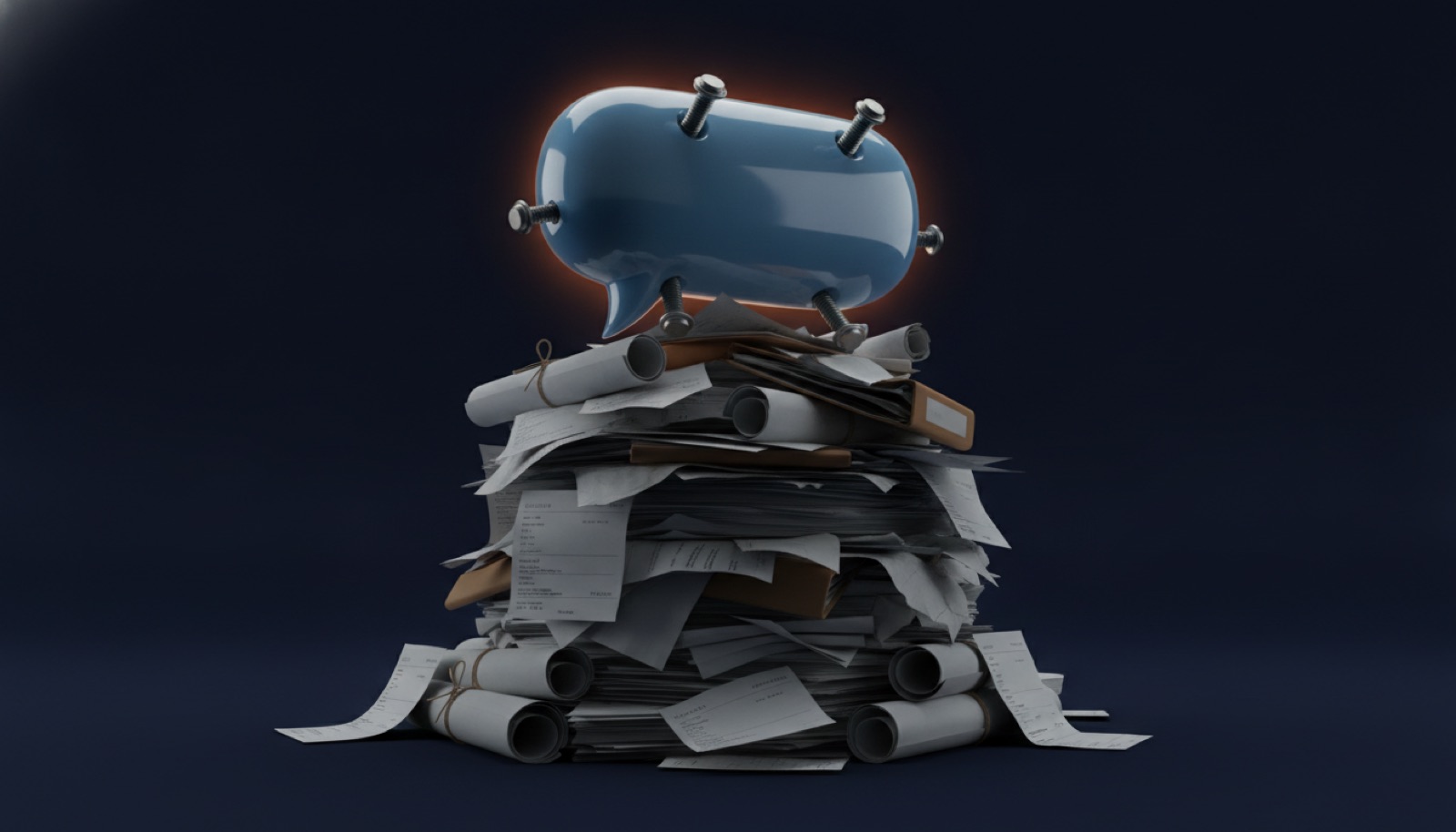
Why the bolt-on chatbot falls flat on site
It sits on top of messy records. AI is only ever as good as the information underneath it. Ask a chatbot what your margin is on the Henderson job and it can only answer if your quotes, variations, invoices, and timesheets all live in one structured system. In most building businesses they do not. The quote is a PDF, the variations are text messages, the receipts are in the ute, and the schedule is in someone's head. A chatbot sitting on top of that has nothing to reason over. The hard work was never the chat window. The hard work is getting the job data structured in the first place, and no amount of AI on top can shortcut that.
It answers questions instead of doing work. Think about where your hours actually go. Takeoffs. Quoting. Chasing invoices. Writing up variations. Assembling progress claims. Keeping the schedule honest when a trade slips. None of those are question-answering problems. They are work-producing problems. A tool that summarises your project status is describing your workload back to you. What you needed was for something to take a piece of that workload away.
A wrong number costs real money. In most industries, an AI that is wrong 5% of the time is a curiosity. In construction it is a disaster, because the errors land in quotes and claims. Miss a wall in a takeoff or invent a quantity, and you either eat the cost or fight the client about it. This is why trust is the whole game. If an AI gives you a number without showing where it came from, you cannot check it without redoing the work yourself, and if you have to redo the work, it saved you nothing.
Nobody types prompts on a ladder. The people this software is meant to serve are on scaffolds, in roof cavities, and driving between sites. The chat interface assumes a person at a desk with time to compose a question and read a considered reply. That person exists in a software company. On a building site, the interaction has to be closer to taking a photo, tapping twice, and getting on with it.
What AI that earns its keep looks like
The good news is that the same technology, pointed at the right problems, is genuinely valuable. The difference is architectural, not cosmetic. AI that works in construction tends to share four traits.
It lives inside the workflow, not beside it. The output is not a paragraph of chat. It is a draft estimate, a populated purchase order, a written scope of works, sitting in the same screen where you would have built it by hand, ready for you to adjust and send.
It shows its working. A takeoff tool should show you the measurements it took on the plan, room by room, so your estimator can verify every quantity in minutes instead of producing them in hours. The moment you can check the working, AI stops being a leap of faith and becomes a fast first draft from a very quick offsider.
It runs on structured data. When jobs, quotes, schedules, invoices, photos, and site diaries already live in one system, AI has real material to work with. It can read a supplier invoice and code it to the right job. It can draft a variation from the site note you typed at smoko. The system of record comes first. The intelligence is only possible because of it.
It starts with the boring work. The wins that hold up in practice are unglamorous. Reading plans. Pulling the details off supplier invoices. Drafting scopes and descriptions. First drafts of schedules from a template. Nobody is handing the client relationship or the final price to a machine, and nobody should. The machine does the hours of preparation, and the builder makes the calls.

Five questions to ask before you believe an AI feature
When the next AI announcement lands in your inbox, run it through these.
- Does it produce work, or just answers? If the demo is a chat conversation, ask what artifact you hold at the end of it.
- Can you check the numbers? Ask to see the working behind any quantity or price it produces. If there is no working to show, walk away.
- What happens when it is wrong? Can you edit the output before it goes anywhere? Does it flag what it was unsure about? Or does a mistake sail straight through to a client?
- Does it work with your data as it actually is? If the feature only shines once every record in your business is perfect, ask what it does for you on day one.
- Would your least techy person use it? If it needs a well-crafted prompt to be useful, it will be used by exactly one person in the office, once.
A vendor with real AI under the hood will answer all five without flinching. A vendor with a chat window will change the subject.
Where we stand
We build AI into Paperless the slow way, one job at a time. Our takeoff tools read the plan and show every measurement they took, so your estimator verifies instead of measures. Scope conversations end in a draft estimate with editable line items, not a wall of text. Document AI reads supplier paperwork into the job it belongs to. Every output is a draft until a human approves it, and every number can be traced back to where it came from.
That is slower to build than a chatbot. It is also the only version of AI we would trust with our own margins, so it is the only version we will ask you to trust with yours.
See it on your own plans. Upload a floor plan and watch the takeoff happen with every measurement shown. Start a free 14-day trial, nothing charged during the trial.